Pop-up fever: why Milan's brands keep betting on the temporary
New product, new campaign, Tuesday afternoon with nothing better planned; any excuse seems good enough these days for a brand to fling open a pop-up.
Walk down practically any street in central Milan this autumn and there's a fair chance you'll bump into one, tucked behind a freshly dressed shopfront window. Visitors queue for gadgets, sample things nobody's tried yet, and soak up an experience that feels sharper precisely because it won't be there next month. Beauty Week, Fashion Week and a packed autumn calendar are about to push demand for temporary spaces through the roof, and honestly, the appetite makes sense. People love a countdown. Everyone's doing it, which is exactly the problem
Everyone's doing it, which is exactly the problem
Here's the uncomfortable bit nobody puts on the press release: most pop-ups have started to blur into one another. Same neutral walls, same photo corner, same little bag of merchandise handed out at the door. If the strongest memory a visitor walks away with is a tote bag or an Instagram Story, the brand itself has quietly slipped into the background, which rather defeats the point of spending a small fortune on the whole exercise. A pop-up shouldn't exist purely to pull people through the door. Its real job starts the moment they step back outside, carrying something that actually sticks.
That's precisely why picking a venue on trend value alone is a mistake worth avoiding. The starting point is always the brief, the audience and what the project genuinely needs to land. Years spent building the sharpest venue portfolio in the city mean knowing exactly which four walls will carry a concept and which ones will just look nice in the render.

Storefront statements: when visibility does the heavy lifting
Some projects need to shout from the street, and Milan happens to be generous with venues built for exactly that. A 63-square-metre showroom in the Isola/Garibaldi district offers two generous shopfront windows and a basement storage area that makes daily logistics considerably less painful, sitting right in a neighbourhood that turns into one of the city's busiest creative hubs during Fuorisalone.
Near the Cinque Vie and Università Cattolica, a prestigious period building brings seven street-facing windows to the table, delivering constant light and visibility close to Palazzo Litta and the Triennale, both firmly on the Design Week radar.
Over towards Cairoli, between Brera and the Duomo, a recently renovated space adds three more windows, a 90-square-metre ground floor, a 40-square-metre mezzanine usable as backstage, and ceilings stretching six metres high, suited especially to fashion, beauty, design and tech brands after real presence.
Blank canvases: when the story needs room to breathe
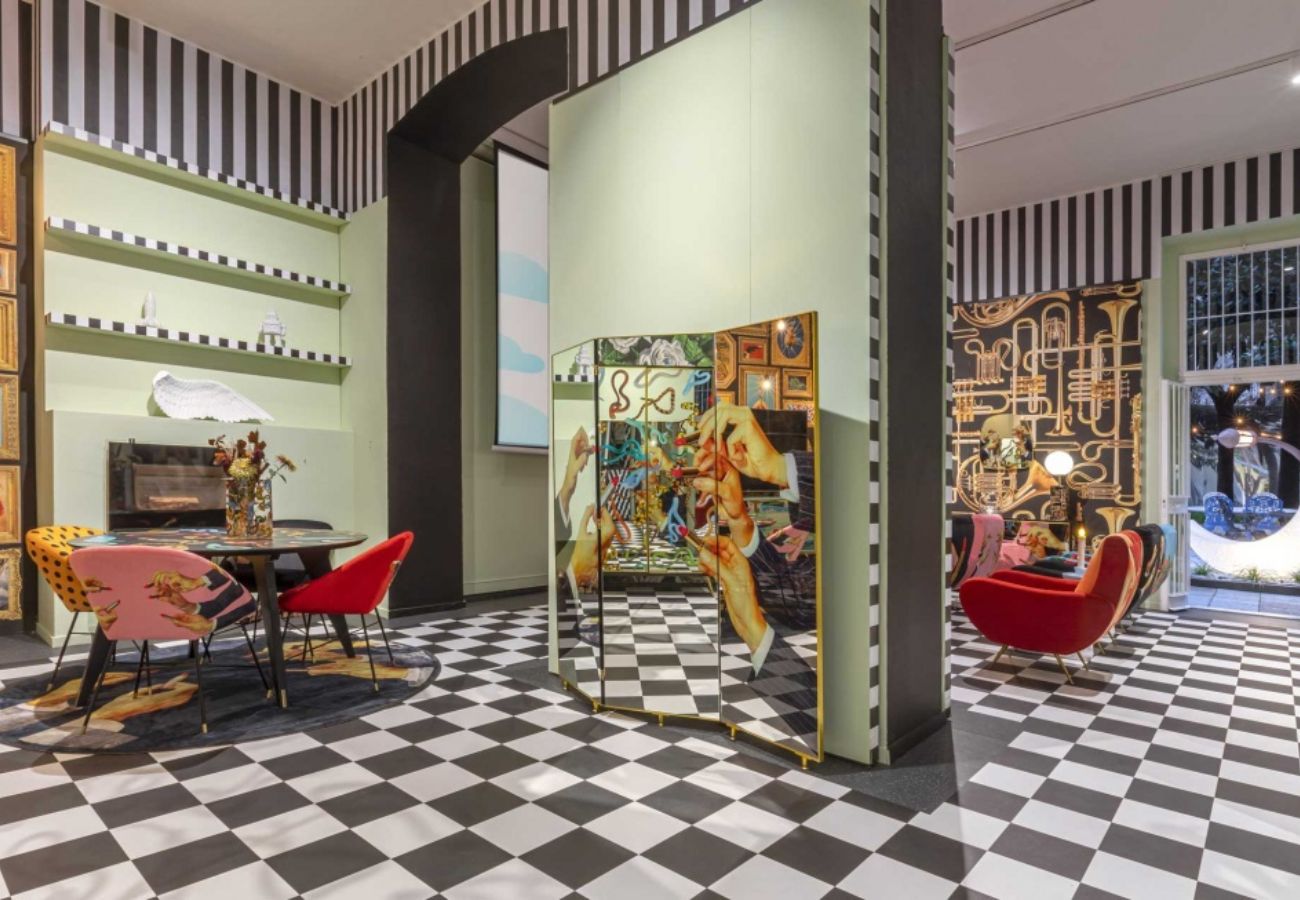
Other projects want a shell rather than a statement, somewhere the concept itself gets to do the talking. A fully independent space on Corso Garibaldi sits inside a striking historic building in the Brera/Garibaldi area, benefitting from constant footfall and a loyal local crowd without losing its own separate identity; equally at home hosting a temporary shop, a photo production or a showroom for an established name.
A short walk away, another Brera/Garibaldi venue keeps things deliberately neutral, letting double-height windows flood the room with natural light while an outdoor area (permits allowing) opens things up further for receptions or outdoor installations. Both spaces trade the loud shopfront approach for atmosphere, working brilliantly whenever the brand's own concept needs to be the star rather than the building.

Building a pop-up that actually earns its keep
Choosing between a loud storefront and a quiet canvas isn't really about personal taste. It comes down to what the audience needs to feel on the way out. A launch built around discovery and exclusivity often thrives in a neutral space where the design team controls every inch. A campaign built around footfall, visibility and spontaneous walk-ins usually wants those big windows working overtime instead.
Timing matters just as much: securing a space during Fuorisalone, Beauty Week or Fashion Week means booking well ahead, since the same neighbourhoods that make a pop-up brilliant also get fiercely competitive the moment the calendar fills up.

The right location does one very simple thing: it allows the pop-up store to close without making the experience disappear. On the contrary, its impact can continue to grow long after the space has been vacated. If you’ve chosen wisely, you’ll see the results in greater attention to your brand, the content generated around the activation, the people you’ve engaged and the contacts you’ve made. Above all, you’ll see it in the way your audience remembers and talks about you.