What captivated us about fashion brands at Fuorisalone 2026
Milan Design Week 2026 marked a change of direction for fashion brands.
After years of crowded pop-ups, viral campaigns and promotional objects designed for social media, many houses chose a quieter approach: fewer distractions, more controlled installations and experiences aimed at building long-term cultural value. Restraint became part of the language of luxury, with fashion brands giving up the need to dominate every corner of the city and instead focusing on creating spaces that could generate reflection and dialogue.
.jpg)
Literature, ideas and cultural identity
Miu Miu’s Literary Club returned for its third edition at the Circolo Filologico Milanese, focusing on writers such as Annie Ernaux and Ama Ata Aidoo. Through readings and conversations centred on “Politics of Desire”, the project explored contemporary female identity and transformed fashion into a platform for cultural exchange.
Jil Sander followed a similar path, presenting an installation connected to reading culture and using space to express the brand’s values rather than simply display products.
Prada continued with the fifth edition of Prada Frames, curated by Formafantasma and titled “In Sight”. The programme explored the role of images in contemporary society, addressing visual culture, environmental impact and the economy of attention. A real step up compared to the umpteenth marketing operations disguised as culture.
.jpg)
From fashion collections to interior design
The relationship between fashion and interiors continues to grow. As the sector searches for new forms of expression, brands are increasingly moving into home collections and lifestyle projects.
H&M Home presented an exclusive collaboration with American designer Kelly Wearstler at Palazzo Acerbi, introducing furniture alongside smaller objects and experimenting with materials such as wood, metal, ceramic, marble and textiles.
Armani/Casa focused on a refined presentation at its Corso Venezia flagship, showing interiors designed as complete living environments. Loro Piana highlighted one of its historic materials, the plaid, transforming it into a decorative element. Fendi presented new pieces for Fendi Casa, including the Peekahill armchair by Controvento, inspired by the iconic Peekaboo handbag.
Gucci surprised audiences by presenting a dual approach: on the one hand, a purely marketing-driven campaign involving the distribution of personalised cans, which quickly surfaced on resale platforms such as Vinted. On the other hand, a contemplative installation centred on a symbol of peace and meditation, set within a flower-filled cloister and featuring contemporary tapestries created by the brand, evoking the heritage of the Gucci universe.
.jpg)
Fashion as a dialogue with the city
Some of the most ambitious projects combined heritage, and contemporary vision.
Gucci Memoria, curated by Demna, revisited more than a century of the Maison’s history at the Chiostri di San Simpliciano, creating a dialogue between past and present. Dior presented a lighting collection at Palazzo Landriani inspired by Christian Dior’s New Look silhouette and his childhood garden in Granville, combining Murano glass, bamboo and natural textures in an immersive environment.
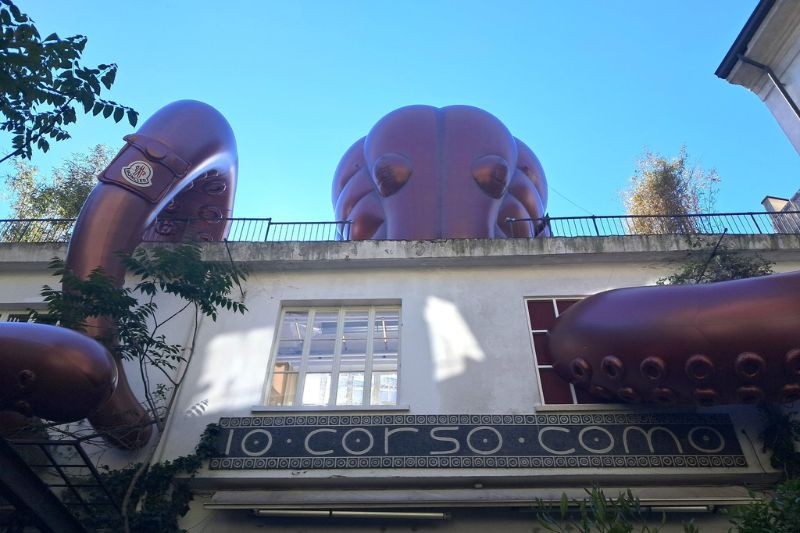
Moncler continued its experimental approach with a monumental inflatable octopus wrapping the façade of Corso Como, turning architecture into a visual statement.
A quieter form of luxury
After editions dominated by promotional objects and online resale phenomena, Milan Design Week 2026 shifted direction, with fashion brands participating in the design conversation without relying on excess or constant visibility.
.jpg)
The most successful projects were those capable of integrating into Milan’s creative fabric, letting new ideas drive the future while drawing on the foundations of a rich past and strong brand heritage.